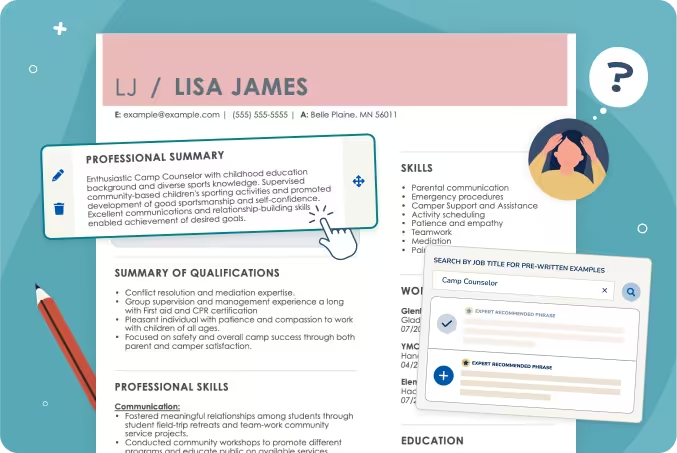
In today’s competitive job market, a well-crafted resume is one of the most powerful tools a job seeker can have. Employers often receive dozens or even hundreds of applications for a single position, making it essential to create a resume that immediately captures attention and highlights your qualifications.
A resume is more than just a list of jobs and educational achievements. It is a marketing document that showcases your skills, accomplishments, and value to potential employers. Whether you are a recent graduate, an experienced professional, or someone changing careers, understanding how to write a winning resume can significantly improve your chances of landing interviews and securing employment.
This guide will walk you through the essential elements of a modern resume and provide practical tips to help you stand out in today’s job market.
Why Your Resume Matters
Recruiters often spend only a few seconds reviewing each resume before deciding whether a candidate moves forward in the hiring process.
A strong resume helps employers quickly identify:
- Relevant experience
- Professional skills
- Educational background
- Career achievements
- Potential value to the organization
Your resume serves as your first impression, and a positive first impression can open doors to new opportunities.
Understand the Purpose of Your Resume
Many job seekers make the mistake of treating their resume as a complete career history.
Instead, your resume should focus on demonstrating why you are the best candidate for a specific position.
A successful resume should:
- Highlight relevant qualifications
- Showcase accomplishments
- Match the employer’s needs
- Encourage recruiters to schedule an interview
Every section should support these goals.
Start with a Professional Contact Section
At the top of your resume, include accurate and up-to-date contact information.
Essential details include:
- Full name
- Phone number
- Professional email address
- City and state (or country)
- Professional networking profile if applicable
Avoid using unprofessional email addresses, as they may create a negative impression.
Write a Strong Professional Summary
A professional summary is one of the first sections recruiters read.
This short paragraph should provide a snapshot of your qualifications and career goals.
Example
“Results-driven marketing professional with five years of experience in digital marketing, content strategy, and brand development. Proven track record of increasing online engagement and driving business growth through data-driven campaigns.”
A strong summary immediately communicates your expertise and value.
Highlight Relevant Work Experience
Your work experience section is often the most important part of your resume.
List positions in reverse chronological order, starting with your most recent role.
For each position, include:
- Job title
- Company name
- Employment dates
- Key responsibilities
- Notable achievements
Focus on Results
Rather than simply describing tasks, emphasize accomplishments.
For example:
Instead of:
“Managed social media accounts.”
Write:
“Increased social media engagement by 40% through strategic content planning and audience targeting.”
Employers are interested in results and measurable contributions.
Use Action Verbs
Strong action verbs make your resume more engaging and professional.
Examples include:
- Developed
- Managed
- Implemented
- Coordinated
- Improved
- Created
- Analyzed
- Led
- Achieved
- Optimized
Action-oriented language demonstrates initiative and effectiveness.
Showcase Your Skills
The skills section allows employers to quickly identify your capabilities.
Include a combination of:
Technical Skills
Examples:
- Microsoft Excel
- Graphic Design
- Project Management Software
- Programming Languages
- Data Analysis Tools
Soft Skills
Examples:
- Communication
- Leadership
- Problem-Solving
- Teamwork
- Time Management
Focus on skills that are relevant to the position you are applying for.
Tailor Your Resume for Every Job
One of the most effective ways to improve your resume is customization.
Many employers use Applicant Tracking Systems (ATS) to screen resumes before a recruiter reviews them.
To improve your chances:
- Read the job description carefully
- Identify important keywords
- Incorporate relevant terms naturally
- Highlight matching skills and experience
Tailoring your resume demonstrates attention to detail and increases compatibility with ATS software.
Include Education and Certifications
Your education section should include:
- Degree or qualification
- Institution name
- Graduation date (optional for experienced professionals)
If you have relevant certifications, list them separately.
Examples include:
- Project Management certifications
- Marketing certifications
- Technology certifications
- Industry-specific qualifications
Professional development demonstrates commitment to continuous learning.
Keep the Design Clean and Professional
A visually appealing resume improves readability.
Best Practices
- Use a simple layout
- Choose professional fonts
- Maintain consistent formatting
- Use bullet points
- Leave adequate white space
Avoid excessive colors, graphics, or decorative elements unless you work in a creative industry where such designs are expected.
A clean design helps recruiters focus on your qualifications.
Optimize for Applicant Tracking Systems (ATS)
Many companies rely on ATS software to filter applications.
To improve ATS compatibility:
- Use standard section headings
- Avoid complex graphics
- Include relevant keywords
- Save files in accepted formats
- Use simple formatting
A resume that cannot be properly read by ATS software may never reach a recruiter.
Quantify Your Achievements
Numbers and measurable results make your accomplishments more credible.
Examples:
- Increased sales by 25%
- Reduced costs by 15%
- Managed a team of 12 employees
- Improved customer satisfaction ratings by 30%
Quantifiable achievements help employers understand the impact of your work.
Avoid Common Resume Mistakes
Even strong candidates can weaken their applications through simple errors.
Spelling and Grammar Mistakes
Proofread carefully before submitting your resume.
Generic Content
Avoid sending the same resume to every employer.
Excessive Length
For most professionals, one or two pages is sufficient.
Irrelevant Information
Focus on qualifications that support your application.
Outdated Contact Details
Ensure recruiters can easily reach you.
Attention to detail reflects professionalism.
Add Relevant Keywords
Many employers search resumes for specific qualifications and skills.
Review the job description and identify:
- Required competencies
- Technical skills
- Certifications
- Industry terminology
Including these keywords can improve visibility during the screening process.
However, always use them naturally and honestly.
Keep Your Resume Updated
Your resume should be a living document.
Update it regularly to include:
- New skills
- Certifications
- Achievements
- Promotions
- Recent projects
Maintaining an updated resume allows you to respond quickly when opportunities arise.
Final Thoughts
Writing a winning resume for today’s job market requires more than listing your work history. A successful resume clearly communicates your value, highlights relevant accomplishments, and demonstrates how your skills align with an employer’s needs.
By creating a professional summary, focusing on measurable achievements, tailoring your resume to each position, and optimizing it for applicant tracking systems, you can significantly increase your chances of securing interviews.
Remember that your resume is often your first opportunity to make an impression on a potential employer. Investing time and effort into crafting a polished, professional, and targeted resume can be one of the most effective steps you take toward achieving your career goals.