One of the most common questions asked during a job interview is, “Tell me about yourself.” Although it sounds simple, many candidates find it surprisingly difficult to answer. Some provide too much personal information, while others give responses that are too brief or unrelated to the position.
The reality is that this question often sets the tone for the rest of the interview. Your answer provides the interviewer with a first impression of your communication skills, confidence, professional background, and overall suitability for the role.
Learning how to answer this question effectively can significantly improve your interview performance and increase your chances of getting hired. In this guide, we will explain why employers ask this question, what they expect to hear, and how to craft a strong and professional response.
Why Interviewers Ask “Tell Me About Yourself”
Many candidates assume this question is simply an icebreaker. While it does help start the conversation, interviewers have a specific purpose in asking it.
They want to learn:
- Your professional background
- Relevant skills and experience
- Career progression
- Communication abilities
- Interest in the position
Rather than asking for your life story, recruiters want a concise summary that explains who you are as a professional and why you are a strong candidate for the role.
A well-structured answer helps the interviewer understand your qualifications and creates a positive first impression.
Common Mistakes Candidates Make
Before discussing the ideal response, it is important to understand some common mistakes.
Sharing Too Much Personal Information
Interviewers are generally not looking for details about your family, hobbies, or personal life unless they are directly relevant to the position.
For example:
- Where you grew up
- Family background
- Personal relationships
These details rarely contribute to your professional qualifications.
Repeating Your Resume Word for Word
Your interviewer has already reviewed your resume.
Instead of reading it back to them, use your answer to provide context and highlight key achievements.
Speaking Too Long
A common mistake is giving a five- or ten-minute response.
A strong answer typically lasts between one and two minutes.
Keep your response focused and relevant.
Being Unprepared
Many candidates assume they can answer this question naturally without preparation.
However, an unstructured answer can make you appear uncertain or disorganized.
Preparation helps you communicate clearly and confidently.
The Best Structure for Your Answer
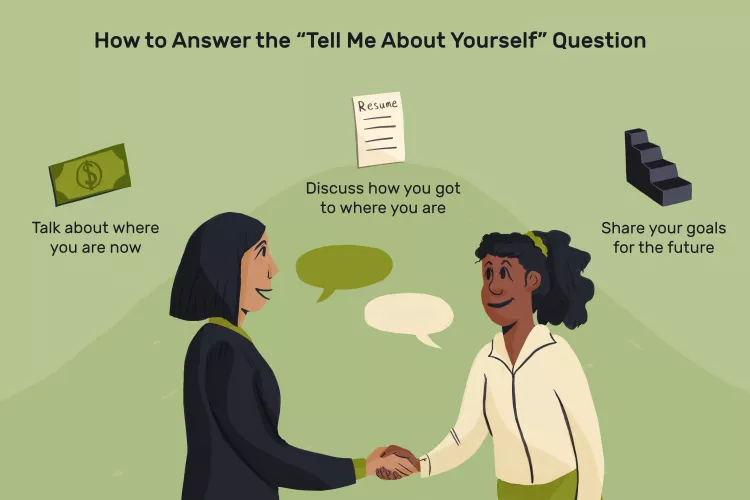
One of the most effective methods is the Present-Past-Future framework.
This simple structure keeps your response organized and easy to follow.
Present
Start by discussing your current role or recent professional situation.
Explain:
- Your current position
- Main responsibilities
- Relevant expertise
Past
Briefly discuss previous experiences that helped you develop important skills and qualifications.
Focus on experiences related to the position you are applying for.
Future
Conclude by explaining why you are interested in the opportunity and how it fits your career goals.
This section connects your background to the role and demonstrates enthusiasm.
Example Answer for an Experienced Professional
Here is an example using the Present-Past-Future approach:
“I currently work as a digital marketing specialist, where I manage content strategies, social media campaigns, and search engine optimization projects. Over the past three years, I have helped increase website traffic and improve online engagement for several clients.
Before this role, I worked as a marketing assistant, where I developed strong skills in content creation, analytics, and campaign management. These experiences helped me build a solid understanding of digital marketing principles.
I am now looking for an opportunity to take on greater responsibilities and contribute to a company that values innovation and growth. That’s one of the reasons I was excited to apply for this position.”
This answer is concise, relevant, and professional.
Example Answer for Recent Graduates
Candidates with limited work experience can focus on education, internships, and transferable skills.
Example:
“I recently graduated with a degree in Business Administration, where I developed strong analytical and communication skills through academic projects and group assignments.
During my internship with a local company, I assisted with customer service operations and gained practical experience working in a professional environment. I enjoyed solving problems and helping improve customer satisfaction.
I am excited about this opportunity because it allows me to apply what I have learned while continuing to develop my skills and grow professionally.”
This response highlights strengths even without extensive work experience.
Tailoring Your Answer to the Job
A generic answer may not leave a strong impression.
Instead, customize your response based on the position.
Review the Job Description
Identify:
- Required skills
- Key responsibilities
- Preferred qualifications
Highlight experiences that align with those requirements.
Focus on Relevant Achievements
If the role emphasizes leadership, discuss leadership experiences.
If technical skills are important, mention relevant projects or accomplishments.
The goal is to demonstrate how your background matches the employer’s needs.
Highlight Key Achievements
Including measurable accomplishments can strengthen your response.
For example:
- Increased sales by 20%
- Reduced project completion time by 15%
- Improved customer satisfaction scores
- Managed successful team initiatives
Specific results help recruiters understand the value you can bring to the organization.
Whenever possible, support your statements with evidence.
Demonstrate Enthusiasm
Employers prefer candidates who are genuinely interested in the opportunity.
As you conclude your answer, explain why the role appeals to you.
For example:
“I am particularly interested in this position because it combines project management and customer engagement, two areas where I have developed strong skills and enjoy contributing.”
Enthusiasm helps create a positive impression and shows motivation.
Practice Your Delivery
Even the best answer can be ineffective if delivered poorly.
Practice helps improve:
- Confidence
- Clarity
- Speaking pace
- Professionalism
Mock Interviews
Conduct practice interviews with:
- Friends
- Family members
- Mentors
- Career coaches
Feedback can help identify areas for improvement.
Record Yourself
Listening to your own responses can reveal habits such as:
- Speaking too quickly
- Excessive filler words
- Unclear explanations
Regular practice leads to more polished and confident answers.
Maintain Positive Body Language
Your answer involves more than words alone.
Interviewers also evaluate nonverbal communication.
Positive body language includes:
- Eye contact
- Natural smiles
- Good posture
- Calm gestures
Avoid:
- Looking distracted
- Crossing your arms
- Fidgeting excessively
Strong body language reinforces confidence and professionalism.
Keep It Professional
Remember that this question focuses on your professional identity.
A good answer should emphasize:
- Career experience
- Skills
- Accomplishments
- Career goals
Avoid unrelated personal details unless they directly support your qualifications.
Professionalism helps establish credibility and keeps the conversation focused.
Why This Question Is So Important
Many interviewers form their initial impressions during the first few minutes of an interview.
A strong answer to “Tell me about yourself” can:
- Build confidence
- Create positive momentum
- Highlight your qualifications
- Demonstrate communication skills
- Capture the interviewer’s interest
Because it often serves as the opening question, it can influence the direction of the entire interview.
Final Thoughts
The question “Tell me about yourself” may seem simple, but it is one of the most important questions you will encounter during a job interview. A well-prepared answer allows you to introduce yourself professionally, highlight your most relevant qualifications, and explain why you are interested in the position.
By using the Present-Past-Future framework, focusing on relevant achievements, tailoring your response to the role, and practicing your delivery, you can answer this question with confidence and clarity.
Remember that the goal is not to tell your life story but to provide a concise and compelling summary of your professional journey. With preparation and practice, you can turn this common interview question into a powerful opportunity to make a strong first impression and increase your chances of securing the job.